



Book review by Andrea K. Hammer
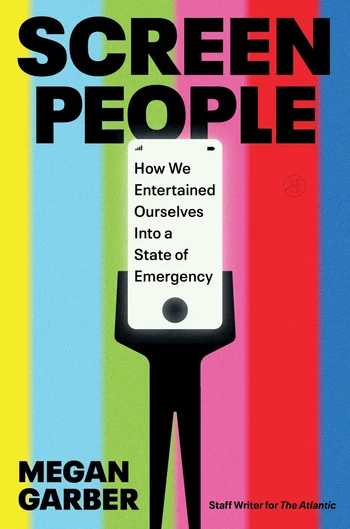
Screen People: How We Entertained Ourselves into a State of Emergency by Megan Garber is a timely and insightful but distressing book about the impact of technology on our lives.
The author, a staff writer for The Atlantic covering the intersection of politics and entertainment, was a 2025 New America/Emerson Collective Fellow and recipient of a Mirror Award for writing about the media. As the author of On Misdirection and podcast co-host of How to Know What’s Real, Megan Garber elaborates on these and other thought-provoking subjects in Screen People (HarperCollins, April 2026).
A clever contents page with graphics for online symbols including wifi, video, fans and more signals an original approach to introducing 10 information-packed chapters. With titles focusing on movie topics such as screens, sets, scripts and producers, the overarching theater framework is well established.
Introductory discussions about the ways that television and the Internet have raised questions about the nature of reality and perception are illuminating. A fascinating assessment of how people served as each other’s entertainment before television, prompting chairs set up for group viewing versus the two-way smartphone interactive experience, is particularly eye opening.
Although distressing, resulting conclusions about the objectification of humans in images for cropping and mocking are on point, along with keen observations about other “tragedies” of the Internet age such as the inability to truly see each other–despite constant viewing.
The depth and breadth of historical research informs the astute analysis throughout Screen People. Inclusion of arguments from historians such as Warren Sussman, Daniel Boorstein and Simon Morgan enrich discussions about the demands for “performances” on the Internet and the ways that celebrities are forced to become marketing commodities. Additional commentary from sociologists Francesco Alberoni and Charles Horton Cooley fortify key points about the impact of “split-screen lives” and perceptions derived from others’ reactions.
Many other insightful observations shape every chapter. Some of these prompt further thought about the ways that earphones and headphones create barriers, along with further alienation resulting from apps allowing constant monitoring. These discussions incisively address an overriding sense of disconnection–despite the deceptive appearance of 24/7 online “connections.”
Excellent questions are raised about spectatorship and exploitation. A wise understanding of the ways that words shape and reflect the world result in observations about “pieces of semi-fiction,” which many currently require for entertainment–and the need to avoid boredom.
Screen People is an important book for considering the transformative impact of technology on our lives–and efforts to preserve true conversations and genuine interactions.
Andrea K. Hammer is a professional writer with book reviews and articles that have appeared in international publications.